
Why Vietnam Stole My Heart: From Backpacker to Family Travel
I first visited Vietnam in 2011, a basic backpacker with a healthy dose of naivety. I’d crossed the border from either Thailand or Laos—I can’t quite remember the order—but the moment I arrived, I was smitten.
The Vietnamese people were friendly and welcoming, noticeably less pushy than their neighbors. And there wasn’t a tuk-tuk in sight! Getting around was easy, the weather was perfect, and the food was fresh, delicious, and incredibly affordable.
Those were the things I appreciated back then. Fast-forward over a decade. I was living in Australia. I suggested Vietnam as a family holiday destination. Little did I know, it would become our annual getaway for the next three years.
Before diving into the details, here’s the basics:
Getting to Vietnam from Australia
Getting to Vietnam from Australia is easy—but not the fastest. Vietnam Airlines offers direct flights from Melbourne to both Hanoi and Ho Chi Minh City. Either city is a great starting point, depending on whether you want to travel northward or southward.
I really rate Vietnam Airlines—they’re efficient, friendly, and great value for money. I’ve flown both economy and premium, and both are comfortable options. Their premium economy is reasonably priced, with spacious seats that make a long flight much more enjoyable. At 6 feet tall, I found the economy seats perfectly comfortable too.
This year, I paid $1,700 (total) for one adult and one child for a return trip to Da Nang. There was a stopover in Ho Chi Minh City. Definitely a solid deal.
Another option is VietJet, a budget-friendly airline that’s very affordable for flights to Vietnam from Australia. I’ve only flown VietJet internally. I can’t comment on their international experience. They’re definitely worth considering if you’re looking for a cheaper alternative.
Getting Around Vietnam
Vietnam is a long country—1,650 km from north to south, and between 50 km and 500 km wide—so having a plan for getting around is key. Luckily, options are plentiful: trains, planes, automobiles, and even sleeper buses.
As a backpacker, I spent a lot of time on sleeper buses. They’re a fun way to travel, giving you the chance to meet other tourists and locals. I remember playing cards with some Germans who were on for just a couple of stops! These buses were basic back then. Nowadays, you can find VIP versions with private pods. They come with phone chargers and all sorts of modern tech.
For family travel, we opted for a sleeper train. The trains have different classes, and the sleeper cars are comfortable—though it’s still a long journey, so manage your expectations. Traveling with a toddler has its own challenges, but that’s a topic for another post!
In the cities, the easiest way to get around is with the Grab app—Vietnam’s answer to Uber. Simply enter your pick-up location and destination, and it gives you options for cars or scooters. Prices are incredibly cheap, and you can pay by cash or card.
Smaller towns like Hoi An are extremely walkable (season dependent), with bicycles everywhere. Many hotels and Airbnb include bikes, sometimes even with toddler seats—just BYO helmet.
E-Sims and Payments:
I use gigago e-sim. They are available for use in most countries and a 30-day Vietnam one cost me around $30 AUD. Maybe not the cheapest but it’s easy to set up and I never had an issue. $30 gets you 5GB per day, for 30 days. You can also choose 7/10/15 days.
Accommodation:
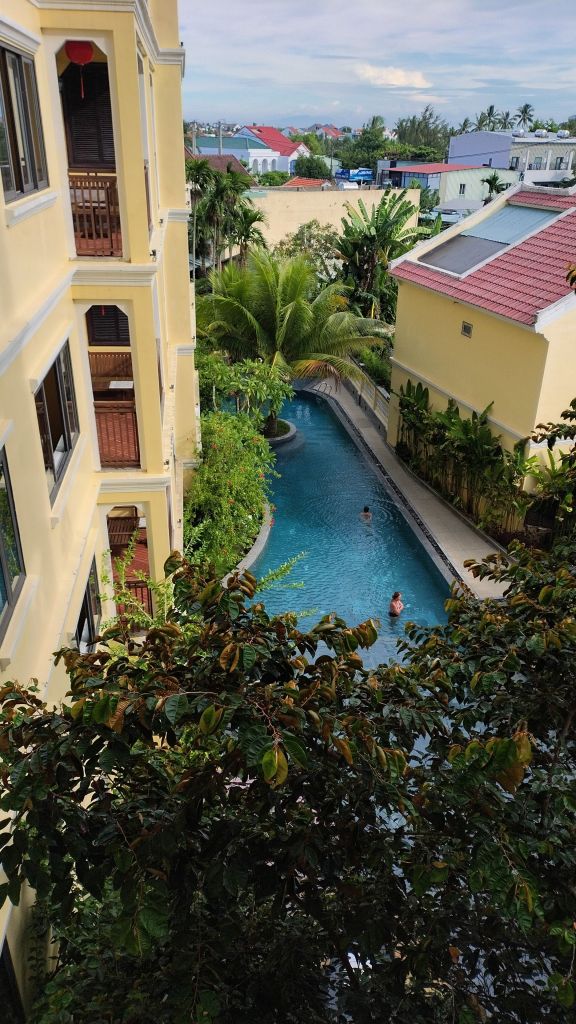
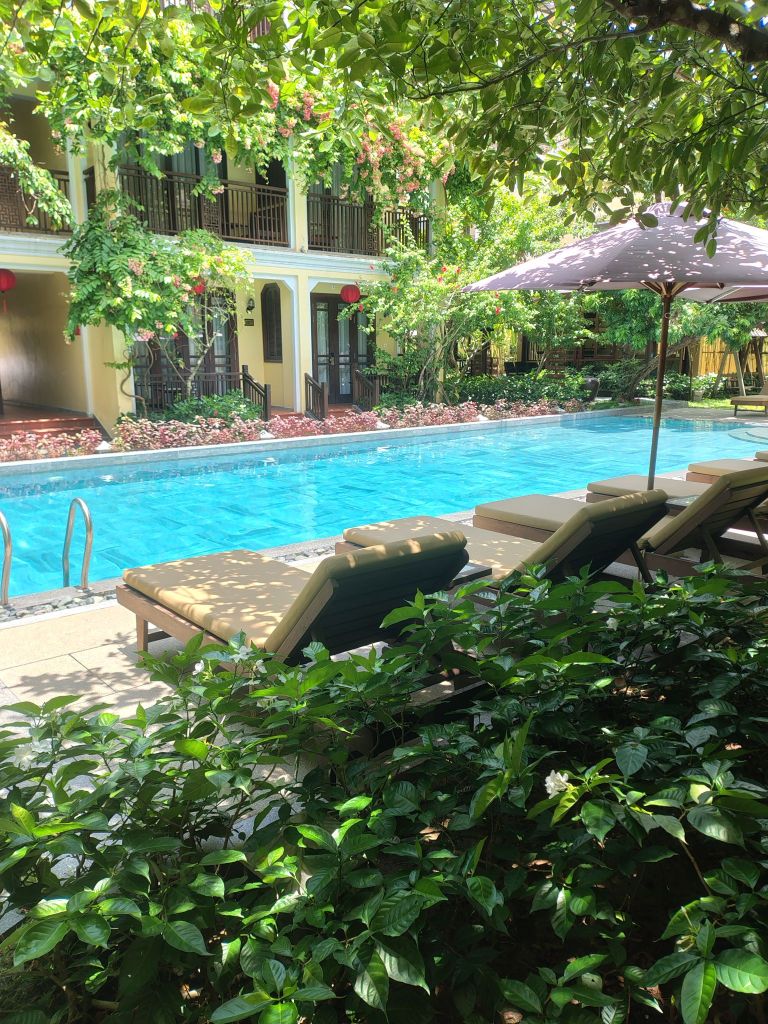
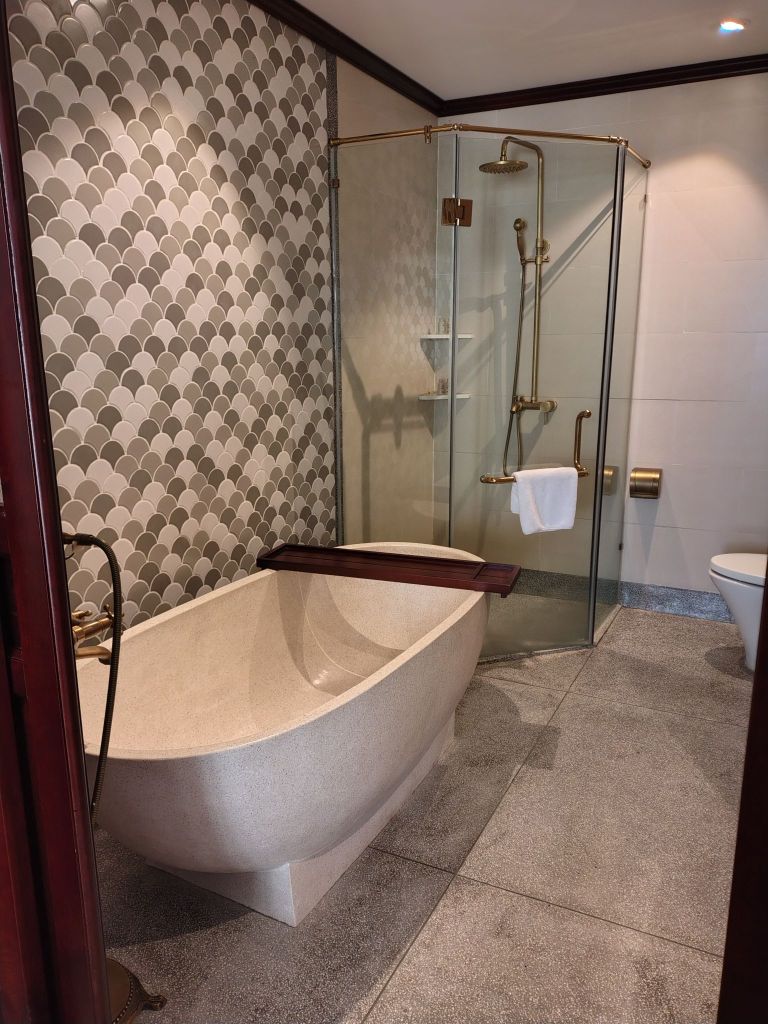
One of the best things about traveling in Vietnam is how affordable the accommodation is. This year, I stayed in a lovely hotel with two pools and daily breakfast included—for just $450 for six nights. Smaller, family run hotels can be found for $220 for 6 nights, also including breakfast.
I usually book in advance through Booking.com. I’ve also taken a more flexible approach. I reserve just the first night or two. Then, I find accommodation once I arrive. Traveling during the off-peak season in Vietnam offers advantages. It is a great way to save money and explore different areas.
The options for accommodation in Vietnam are endless. You can indulge at five-star luxury resorts. Unwind in charming home-stays with only a few bedrooms. Alternatively, book a private villa for extra space and privacy. Choices range from beachfront hotels and city-centre stays. You can also explore unique options like boat accommodations or enjoy peaceful lodgings overlooking the rice paddies.
No matter your budget or travel style, Vietnam offers an incredible variety of places to stay—making it easy to find the perfect spot for your trip.
Eating and Drinking In Vietnam
You are absolutely spoilt for choice anywhere you go in Vietnam. I had the best Banh Mi of my life for $1.85 in Hoi An and I’ve dreamed about it ever since. The food is fresh and cheap and the variety is endless. You could easily go for a 2-week holiday and not eat the same thing twice. However, I’m sure that Banh Mi and Pho will be regular offenders.
Unlike other well-known destinations, I’ve never had an issue with an upset stomach and/or diarrhoea when I’ve visited Vietnam. There are risks like anywhere, but I will happily say that I’ve eaten at street stalls, restaurants and home vendors (which there’s plenty of) and never had an issue.
In restaurants and from street vendors alike, you can try dishes like Banh Xeo (a cross between a crepe and a pancake – oh so tasty), Banh Mi, Pho, Goi Cuon (fresh spring rolls), Bun Cha (grilled pork with noodles), Cao Lau )Hoi An Noodle dish) and so many more.
Not to mention the drinks. The juices are so fresh and so cheap. Is that a song? Pineapple, mango and passionfruit are my favourites but the list is endless. There’s plenty of fresh juice but there’s also lots with condensed milk added. Super tasty but also very calorie dense! That’s the cold drinks, onto the hot ones.
In Australia, Melbourne especially is known for the cafe culture. Vietnam gives it a run for its money. Depending on where you are in the country, you will pass a coffee shop every few metres. It’s estimated that there is 1 coffee shop per 200-250 people. Not bad for a population over 100 million.
Sadly, I don’t like coffee but I watched in envy as my friends and family ordered mouth-watering looking coffees of all flavours. There’s the egg coffee – a Hanoi speciality made with robust coffee beans and topped with a thick, airy-custard made from whipping egg whites and condensed milk, coconut coffee, Vietnamese iced coffee. The list goes on. I finally found an Egg cacao in Mui Ne and it did not disappoint.
One of the things I love the most about travelling, is eating. All of the different cuisines and weird (to me) and wonderful delicacies. Some I try, others I stare at in horror. I love it. What do you enjoy the most?


Give me a natural high